
2024 ThinkTank SDG Community Incubator
Public
THINKTANK
12/1/20244 min read
Introduction
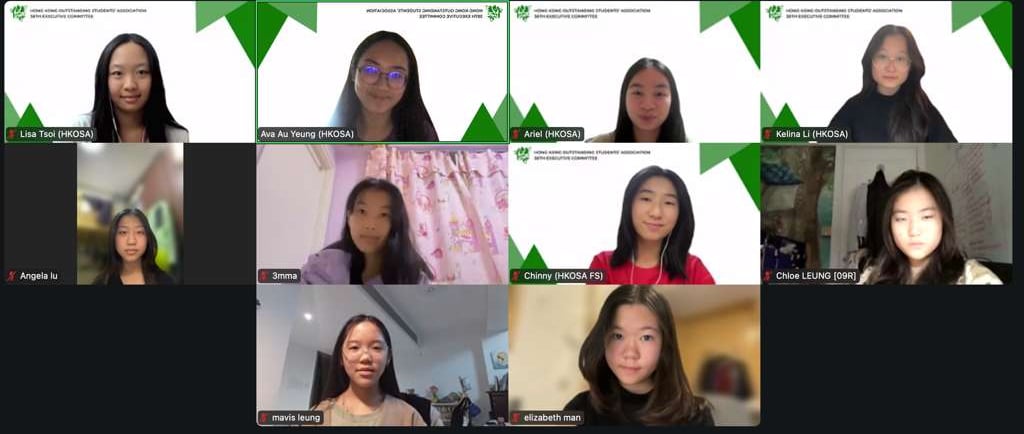
The SDG Community Incubator brought together secondary school students for a two-day online program dedicated to social innovation. Co-organized by the Hong Kong Outstanding Students Association (HKOSA) and EdQuity Hong Kong Foundation, the program was designed to inspire youth-led innovation for social good, guiding participants to explore real-world issues through the lens of the United Nations Sustainable Development Goals (SDGs) and develop implementable solutions to address them using EdQuity’s signature discussion-based learning and design thinking framework,
Over two evenings, participants examined pressing local challenges such as education inequality, climate action, and gender equity, and learned how to transform their insight into actionable project ideas. By fostering empathy, creativity, and collaboration, the ThinkTank framework empowered participants to take the first step toward meaningful change in their communities.
Venue And Date
The program was conducted on ZOOM on 30th November and 1st December from 7:30pm - 9:30pm.
Participant
The program brought together 10 secondary school students from diverse schools and backgrounds across Hong Kong, each motivated by a shared passion for social innovation and community engagement. Working in small teams, participants selected an SDG theme that resonated with them and collaborated closely with peers to explore real-world challenges.
Guided by facilitators and mentors from partner NGOs and social enterprises, students learned to engage in critical discussions, conduct independent research, and co-create solutions that addressed tangible community needs.
Program Structure
The ThinkTank program integrates two transformative educational frameworks: Discussion-based Learning and Design Thinking, forming the foundation for an experience that takes students from reflective understanding to practical innovation.
Before the ThinkTank Program
Participants began their journey by selecting one or more SDGs and choosing a partner organization that aligned with their interests. They reviewed a Context Primer—a set of readings and multimedia resources provided by organizations:
CarbonCare InnoLab (CCIL) – SDG 13: Climate Action
EdQuity Hong Kong Foundation Limited – SDG 4, 10: Quality Education & Reduced Inequalities
Integrated Brilliant Education Limited (IBEL) – SDG 4, 10: Quality Education & Reduced Inequalities
LUÜNA – SDG 10: Gender Equality & Social Inclusion
reBooked – SDG 12, 13: Responsible Consumption & Climate Action
Each team conducted preliminary research using reports, academic resources, and multimedia materials. This background preparation ensured that participants came to the first session ready for informed and meaningful discussions.
Day 1: Empathy and Exploration
The first session introduced participants to the ThinkTank framework and the philosophy behind discussion-based learning, inspired by the Harkness method. Students engaged in small-group discussions to examine real challenges and exchange perspectives on their selected SDGs. HKOSA staff trained by EdQuity Hong Kong Foundation served as facilitators, who guided the groups to listen actively, build on others’ insights, and express perspectives openly. Rather than seeking right answers, participants practiced articulating unique viewpoints developing empathy toward those affected by the issues discussed.
Discussion Framework: From Insight to Empathy
At the heart of the ThinkTank program is the belief that meaningful innovation begins with understanding. Each team engaged in discussion-based learning sessions where students explored complex social issues not by memorizing facts but by exchanging perspectives, challenging assumptions, and listening to one another’s stories.
Each team examined the guiding questions developed around their chosen NGO partner:
CarbonCare InnoLab (CCIL) – What are the most pressing climate challenges in Hong Kong? How do individual and collective actions contribute to climate change?
EdQuity Hong Kong Foundation Limited – What are the goals of education, and how might we envision an equitable education model in Hong Kong?
Integrated Brilliant Education Limited (IBEL) – What barriers do ethnic minority children face in accessing education, and how can we foster inclusion?
LUÜNA – What are the physical, emotional, and social needs related to menstrual health, and what barriers exist to access?
reBooked – How can book reuse and accessibility promote sustainable learning and reduce waste?
Through these guided discussions, students developed contextual awareness and empathy for the people affected by these issues. Many drew connections to their own experiences or community observations, realizing that inequities often exist closer to home than they imagined. By the end of the session, participants had moved beyond surface-level understanding. They were ready to apply empathy as the foundation for creative problem-solving in the design thinking workshop that followed.
The session concluded with an introduction to Design Thinking, emphasizing how empathy serves as the foundation for actionable innovation.
Day 2: Ideation and Implementation
The second session guided students through the Ideation and Implementation stages of Design Thinking. Teams first defined the core problem they aimed to address, then moved into idea generation, brainstorming, and refining potential solutions through guided creative exercises based on The Field Guide to Human-Centered Design by IDEO.org. Participants learned to transform abstract ideas into practical proposals, outlining key steps for implementation, potential partners, and indicators of success.
After the ThinkTank Program
Following the workshop sessions, teams continued refining their projects offline, developing formal proposals that would serve as entries to the SDG Community Incubator. Selected teams will receive mentorship and support to bring their ideas to life in the next stage of the program.
Conclusion
The SDG Community Incubator 2024 successfully brought together young minds eager to make a difference. Over two evenings of discussion, empathy, and creative collaboration, participants transformed complex social issues into actionable ideas that aligned with the United Nations Sustainable Development Goals.
More than just an academic experience, the ThinkTank served as a launchpad for youth-led innovation, empowering students to think critically, care deeply, and design with purpose. Many left the program not only with project proposals but also with a renewed confidence in their ability to create change within their own communities.
info@hkedquity.org
+852 9829 7377
EdQuity Hong Kong Foundation Limited © 2026
Registered Charity IR File No. 91/19551
www.hkedquity.org is owned by