

2024 ThinkTank Social Business Leadership Program (SBLP)
Program Details
THINKTANK
public
8/18/202410 min read
Introduction
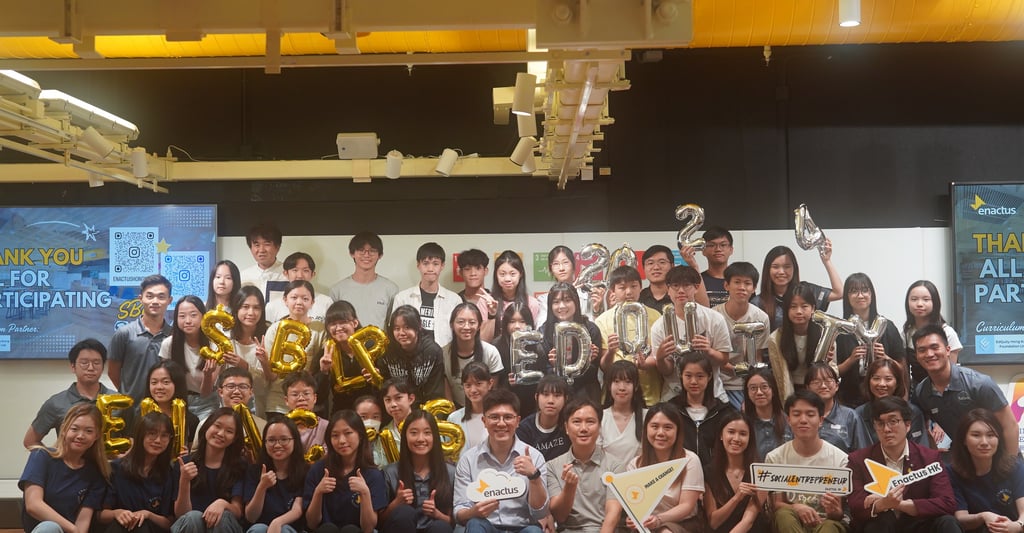
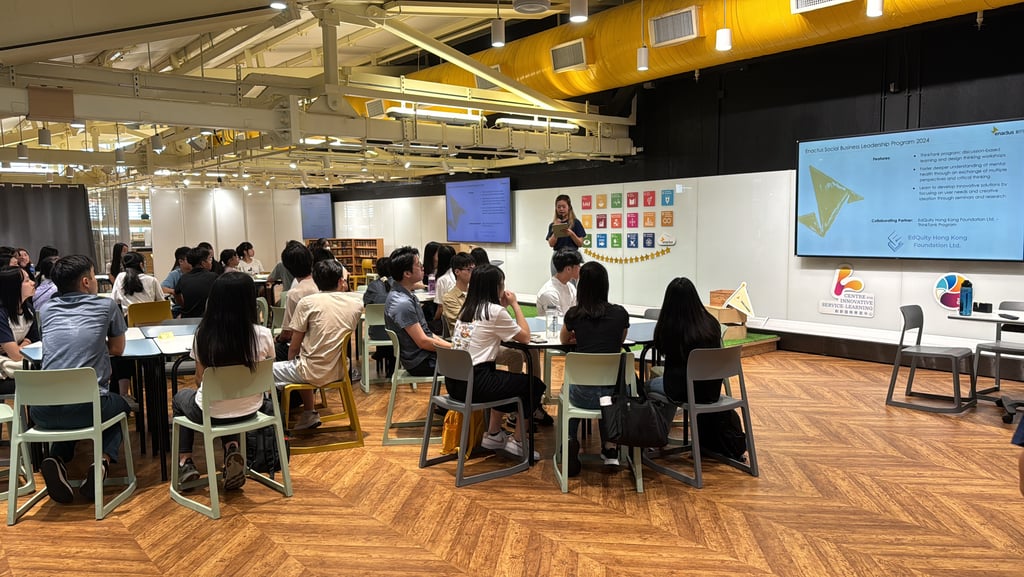
The ThinkTank program was adopted by Enactus Hong Kong as the curriculum for the 2024 Social Business Leadership Program (SBLP), which focused on addressing mental health challenges in Hong Kong through social innovation. Rooted in EdQuity’s signature model of discussion-based learning and design thinking, the three-day program guided participants from critical reflection to creative problem-solving. Through structured discussions, field research, and a design sprint, participants moved through the stages of Empathy, Ideation, and Prototyping, developing community-centered solutions that demonstrated both insight and innovation.
Venue & Dates
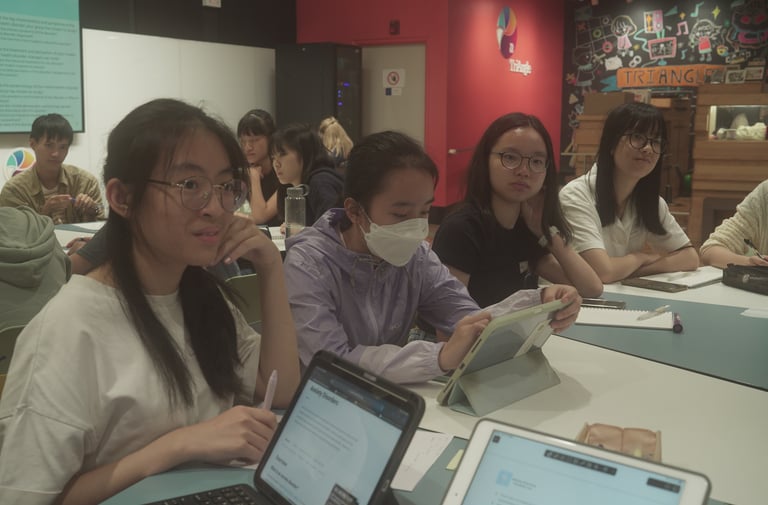
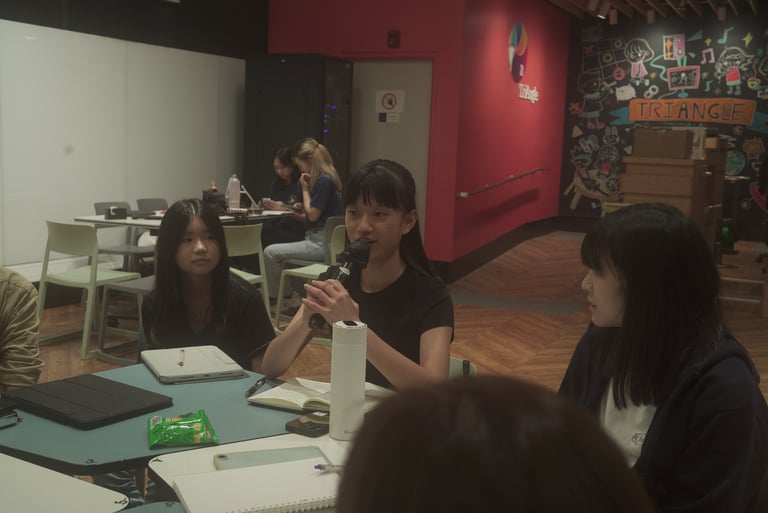
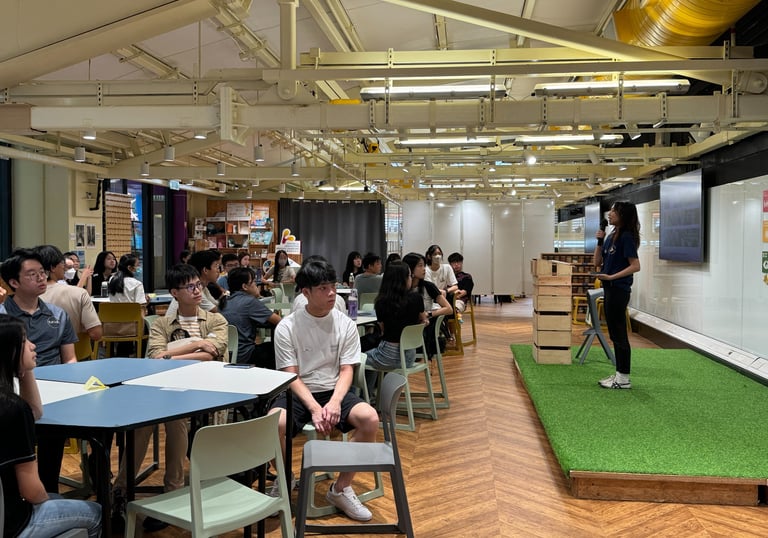
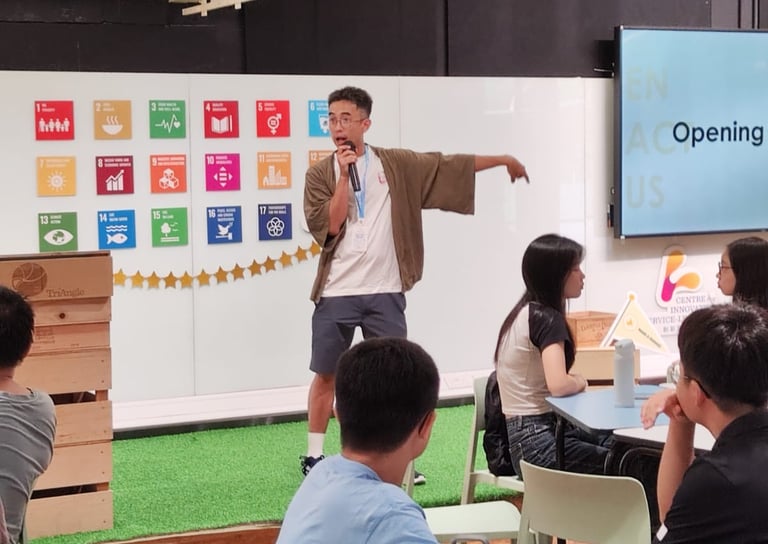
The program took place at the Hong Kong Baptist University TriAngle (Social Innovation Hub) on 15th, 16th, 17th August 2024 from 9am-5:30pm.
Participant
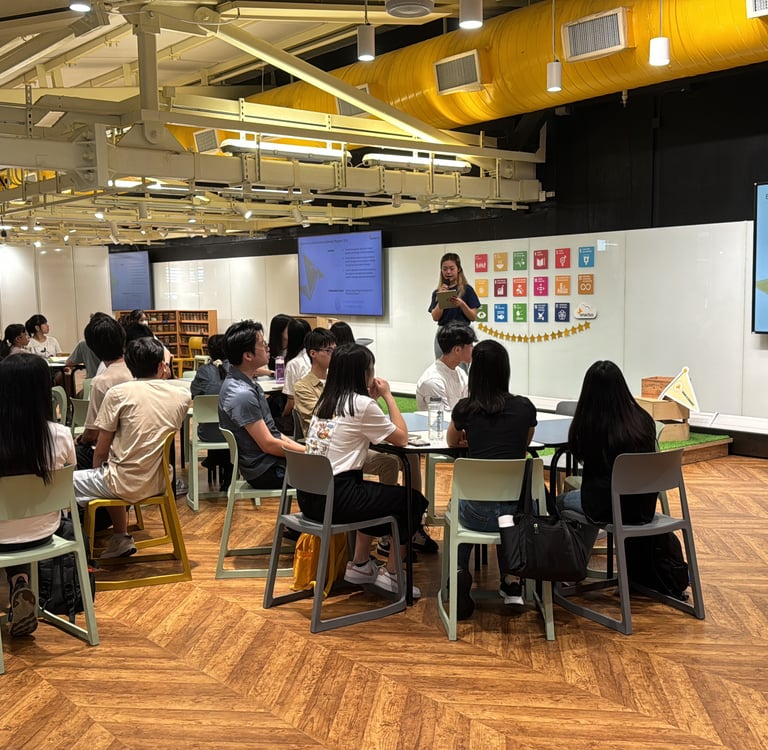
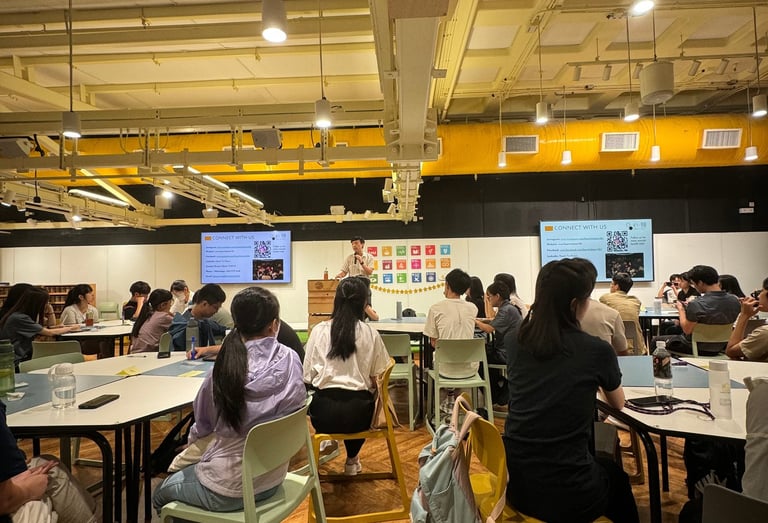
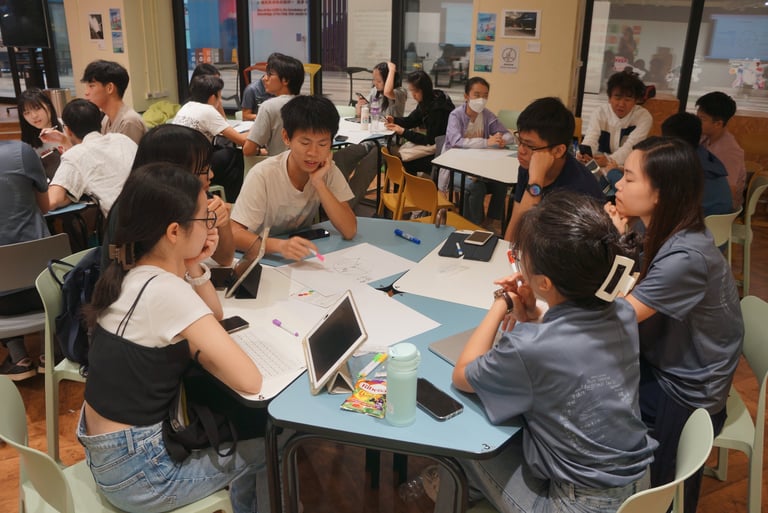
A total of 60 students (14-18 years old) formed six teams. Guided by our staff and volunteers, Enactus HK committee members, and supported by guest speakers, these participants engaged in discussion-based learning sessions, field research, brainstorming sessions, workshop sprints, and final presentations.
Program Structure
The ThinkTank Program, designed and facilitated by EdQuity Hong Kong Foundation, was structured as a three-day journey guiding participants from understanding to innovation. Each day builds upon the previous one, beginning with empathy and context-building, advancing through field research and problem definition, and culminating in creative prototyping and presentation. Through this progression, participants experienced the full Design Thinking cycle, applying it to real-world mental health challenges.
Day 1: Foundation and Framing
The first day focused on building empathy and shared understanding. Participants explored how social, historical, and systemic factors shape mental health, setting the foundation for user-centered innovation.
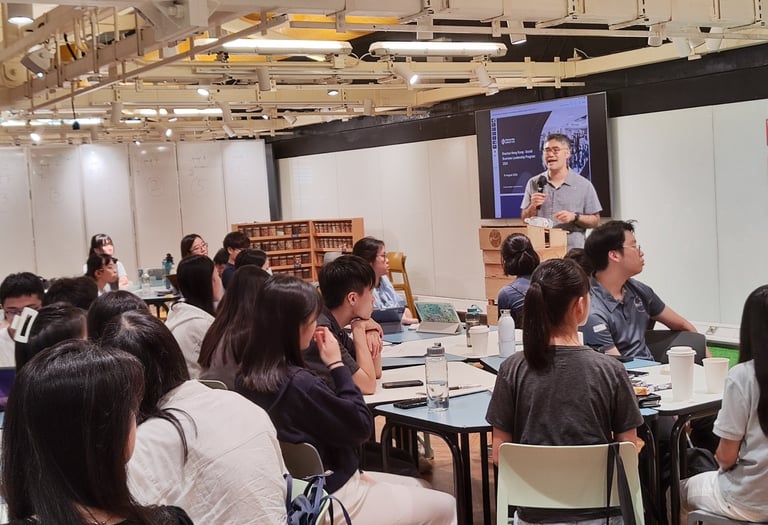
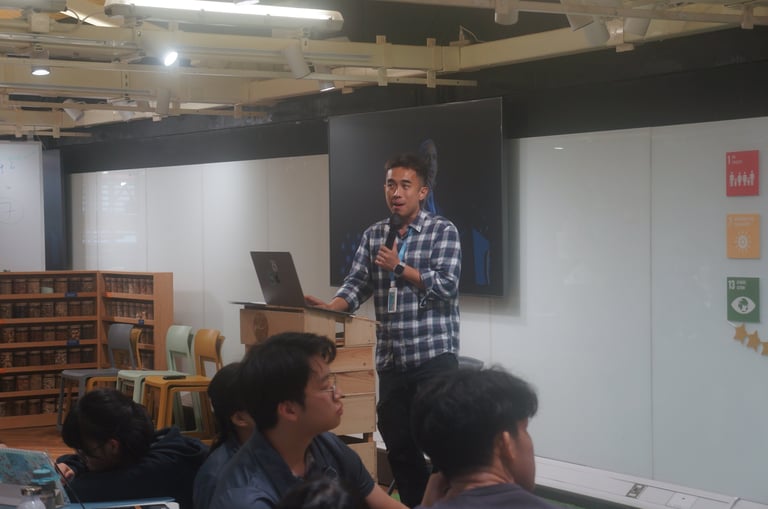
Startup Sharing: “Foundations of Entrepreneurship in Social Business” (Dixon Cheng)
Introduced the concept of social entrepreneurship as a tool for solving human-centered challenges, helping participants see innovation as a response to empathy.
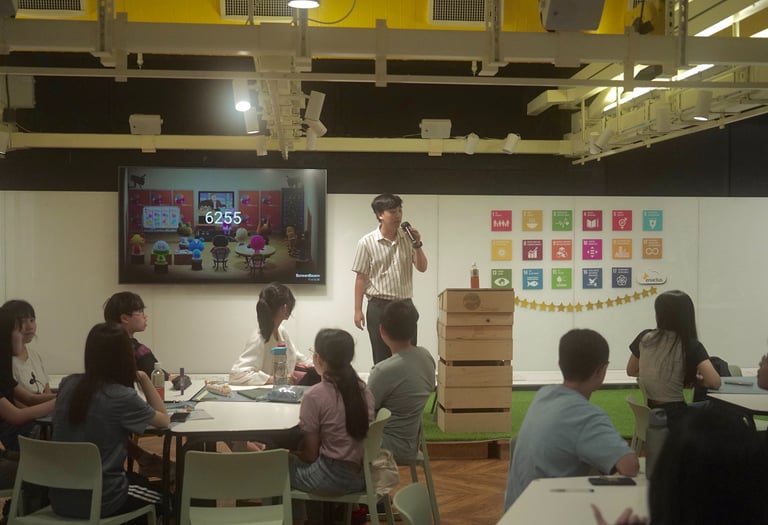
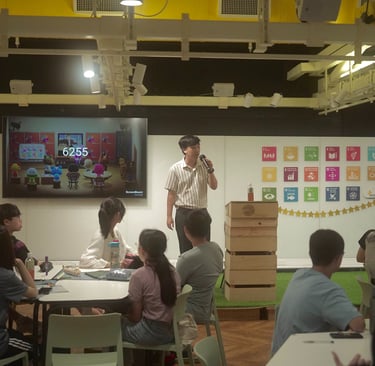
Kahoot Topic Introduction
A custom quiz developed by scientists in EdQuity’s team taught participants key concepts about various mental health conditions, such as their etiology, symptoms, and epidemiology. The activity helped participants identify knowledge gaps, deepen understanding, and choose a disorder to focus on for the rest of the program.
Seminar 1: “Understanding the Historical Evolution of Mental Health” (Michael Chan)
Provided context on how perceptions of mental illness have evolved, prompting participants to reflect on stigma and structural inequities that persist today.
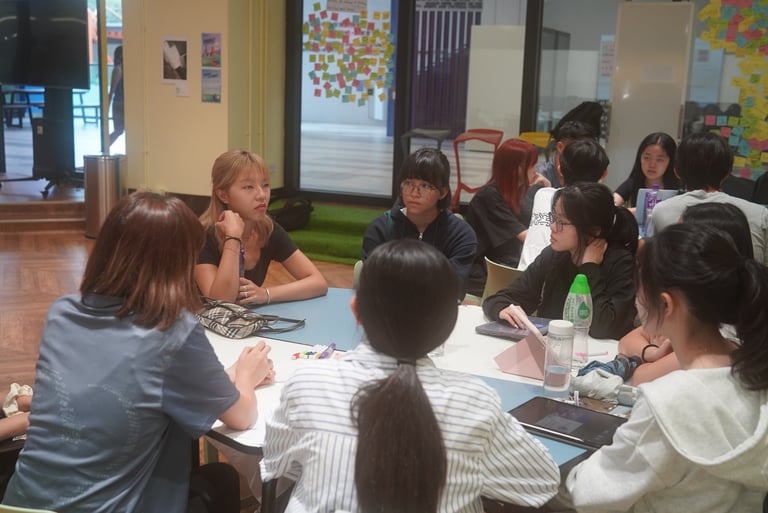
Independent Research & Discussion 1: What Is Mental Health?
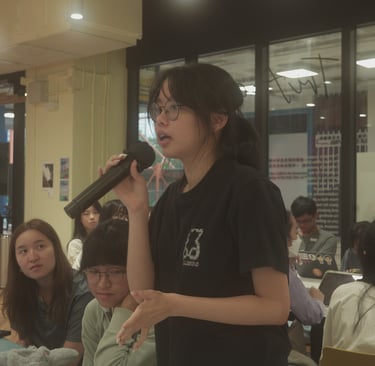
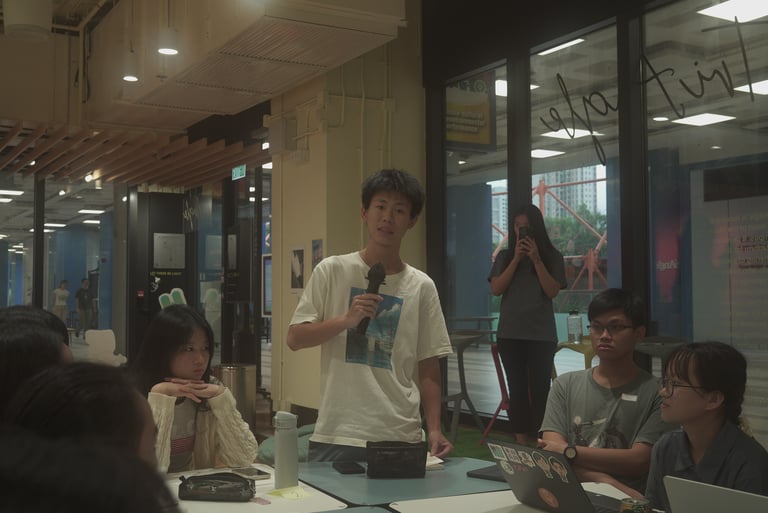
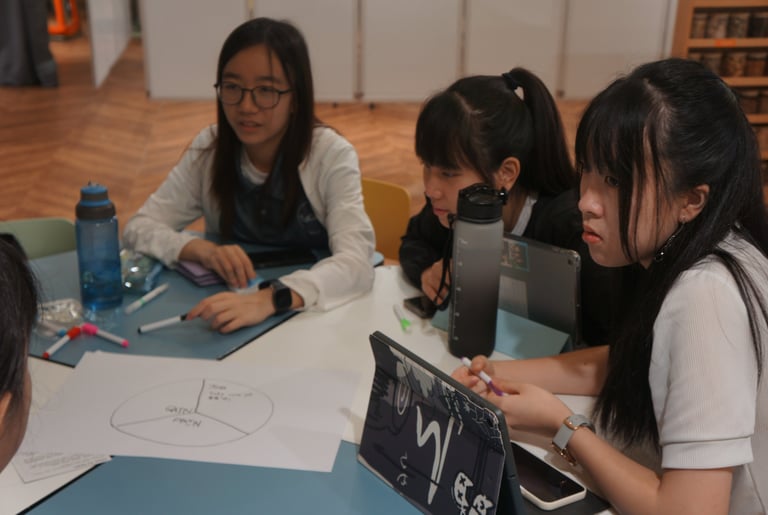
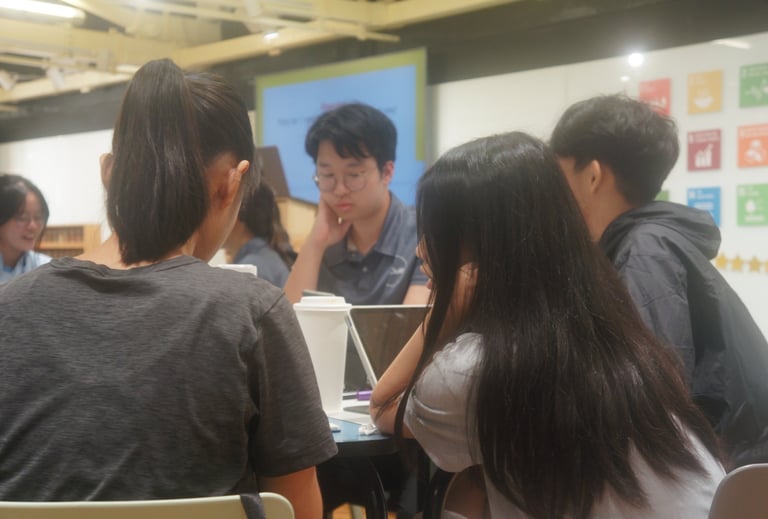
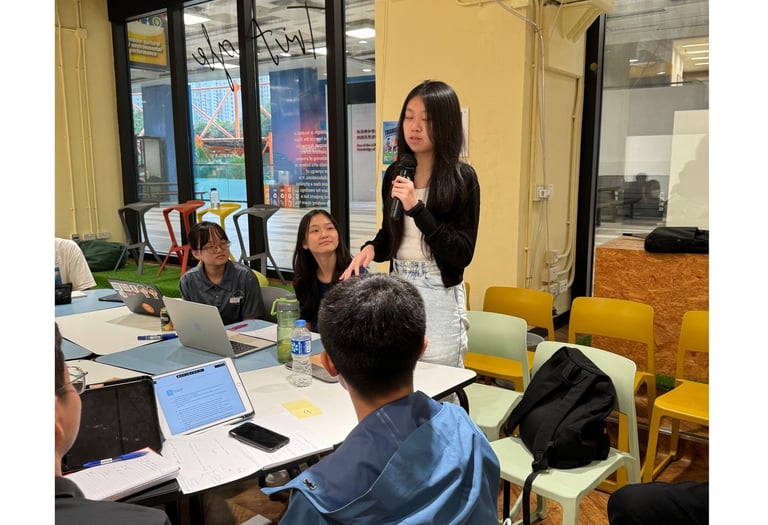
Each team conducted short research and engaged in Harkness-style dialogue around how different societies understood mental health across time, and which events or figures shaped public perception. This built historical and conceptual empathy, helping participants view mental health as a construct influenced by culture and time.
You may find an Instagram Recap post of Day 1 here.
Day 2: Exploration and Problem Definition
The second day emphasized field engagement and systems thinking. Participants explored how environmental, social, and institutional factors affect mental health, and began defining specific challenges through real-world research.
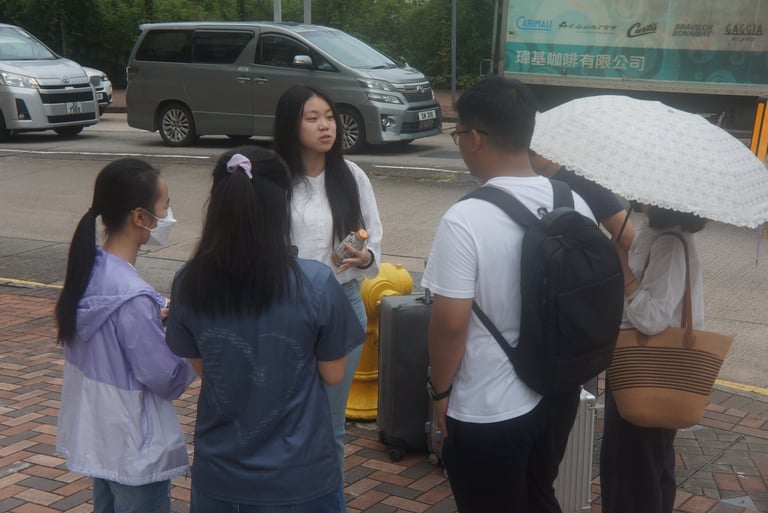
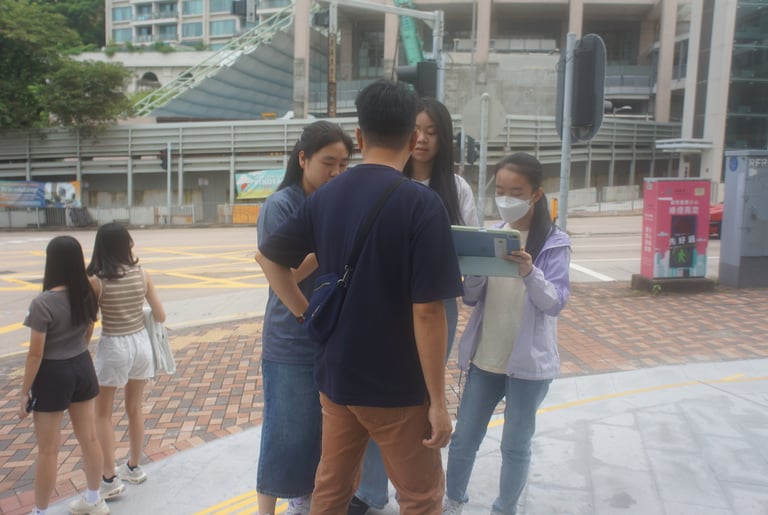
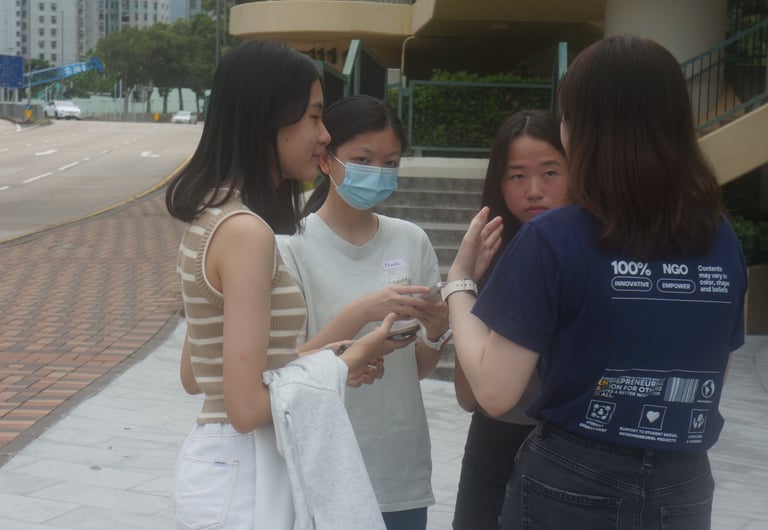
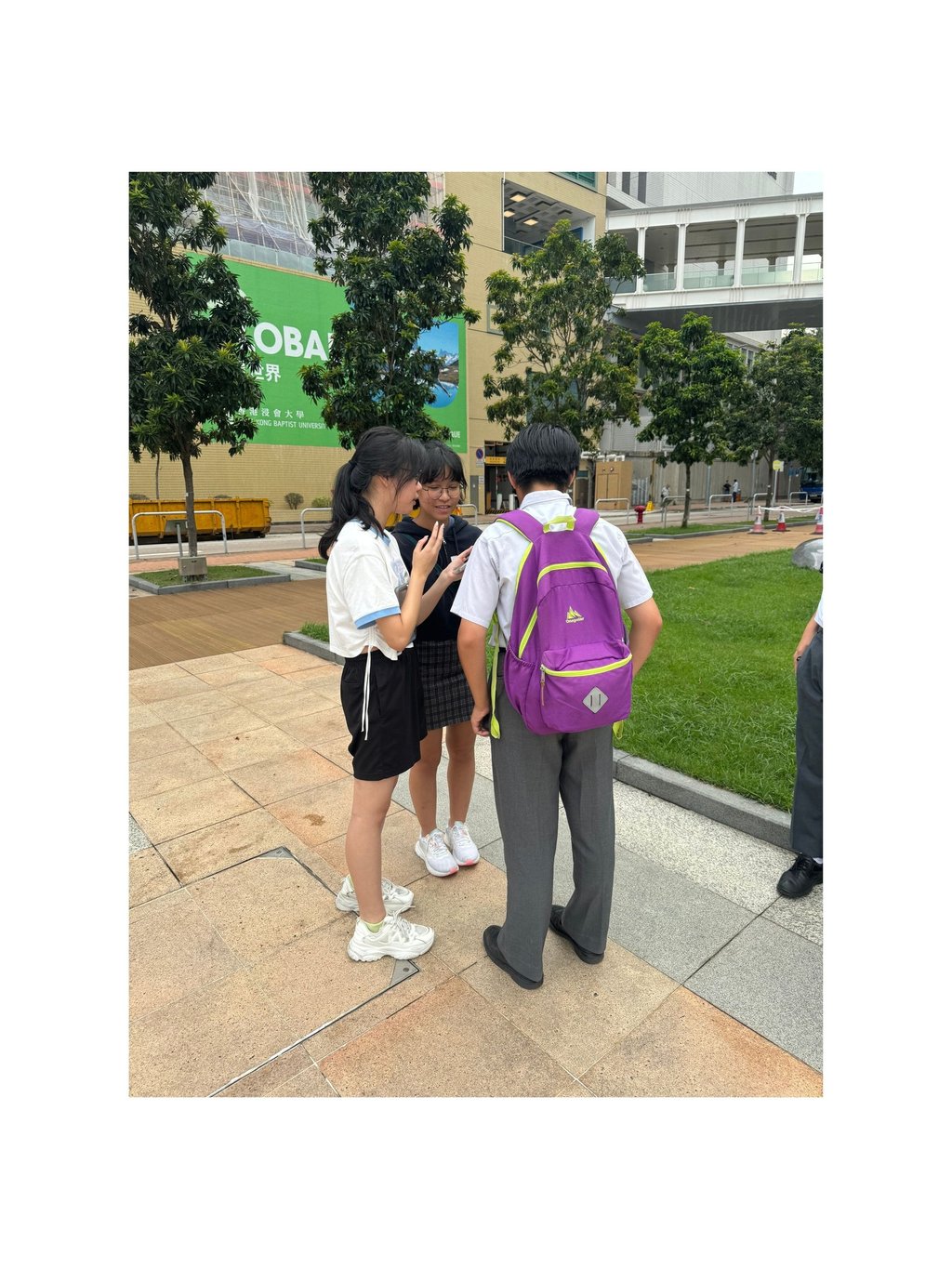
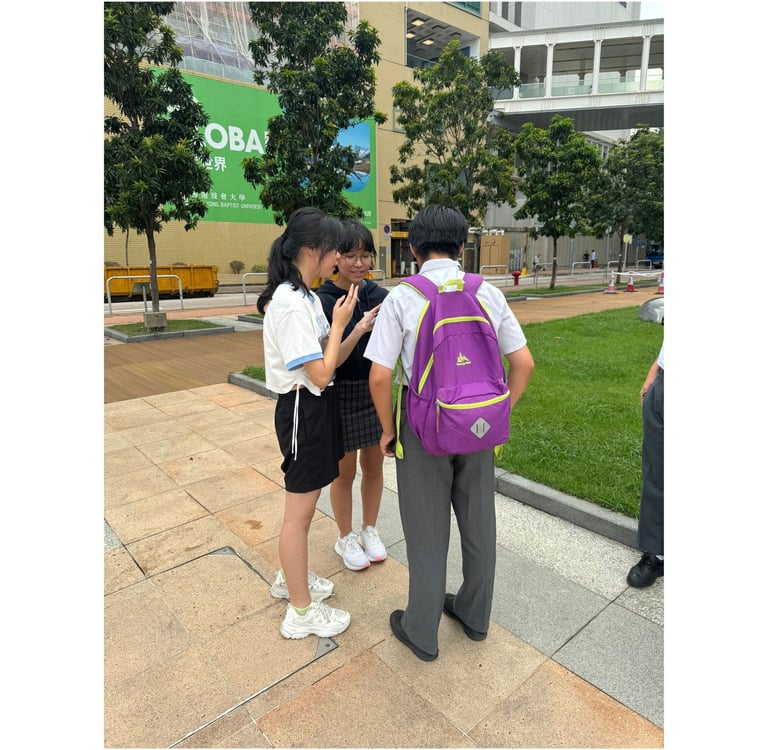
Street Interview Briefing & Fieldwork
Teams conducted community interviews to understand public awareness, lived experiences, and barriers to accessing mental health care.
Discussion 2: Factors Affecting Mental Health
Building on their field observations, participants examined how stress, inequality, and access to care influence mental well-being. They discussed topics such as the role of socioeconomic status, education, and policy in shaping mental health outcomes.
Seminar 2: “Enhancing Mental Health through Support and Systemic Change” (Jonathan Mok)
Expanded participants’ perspectives to include policy, culture, and institutional structures that sustain inequities in mental health care.
Pitching Workshop: “Pitching Your Idea” (Nicholas Ooi)
Introduced persuasive storytelling and structured problem framing, helping teams clearly articulate their chosen issue and its social significance.
Independent Research & Discussion 3: How Do We Improve Mental Health in Society?
Focused on envisioning actionable ways to enhance mental health through awareness, support systems, and systemic reform, laying the groundwork for design ideation.
You may find an Instagram Recap post of Day 2 here.
Day 3: Ideation and Innovation
The final day centered on creative problem-solving. Under the guidance of facilitators from EdQuity, participants applied the Design Thinking framework to transform their insights from earlier discussions into practical, human-centered solutions. The day was divided into three key phases, each guiding participants from clarity to creativity to real-world application.
Problem Definition Phase
Participants began by synthesizing their research and discussion insights to bring clarity and focus to their design challenge. The goal was to define a meaningful and actionable point-of-view statement that reflected the user’s needs, frustrations, and aspirations.
Jobs, Pains, and Gains (JP&G) Model: Teams identified what their users were trying to achieve (Jobs), the barriers they encountered (Pains), and their desired outcomes (Gains). This method helped participants empathize deeply and understand the broader problem space.
Insight Statements: Teams distilled patterns from their JP&G findings into concise insight statements that captured key opportunities and perspectives.
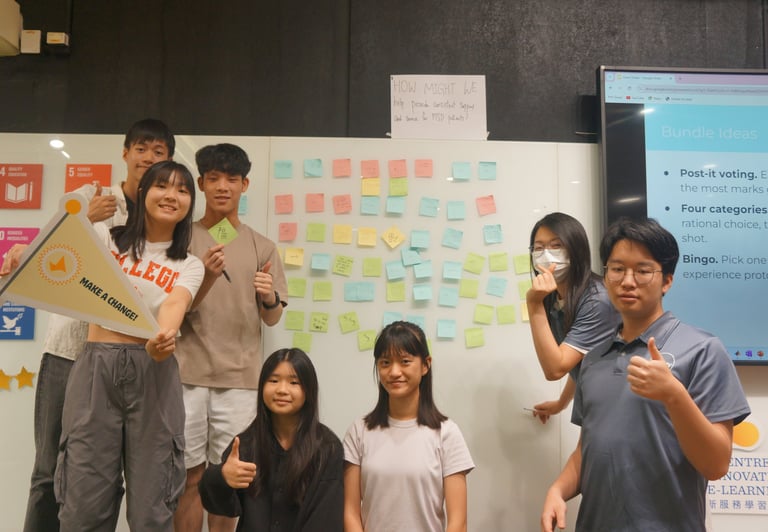
How Might We (HMW) Statements: Participants reframed these insights into “How might we…” questions to turn user challenges into design opportunities and launchpads for creative thinking.
Ideation Phase
Building on clearly defined challenges, participants entered the Ideation Phase, where they worked collaboratively to generate, combine, and refine a large volume of creative ideas. The goal was to think expansively before narrowing down to the most promising solutions.
Brainstorming Session: Teams engaged in a rapid-fire ideation session, producing up to a hundred ideas in 20 minutes. Guided by the principles of defer judgment, encouraging wild ideas, and building on others’ thoughts, participants explored bold, unconventional directions.
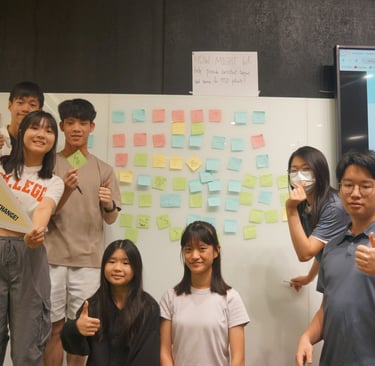
Bundling Ideas: After brainstorming, participants clustered similar concepts into thematic groups, combining complementary elements to form more comprehensive system-level solutions.
Selecting Ideas for Prototyping: Through Post-it voting and structured selection exercises, each team chose a balanced set of ideas to take forward into prototyping.
Implementation Phases
The final portion of the day focused on bridging ideas and execution, transforming abstract OH concepts into actionable, testable plans while keeping users at the heart of every decision.
Resource Assessment: Teams evaluated what resources, partnerships, and capabilities were needed to bring their ideas to life. They mapped their existing assets, identified gaps, and clarified distribution and responsibility pathways.
Roadmap Creation: Participants developed a detailed timeline and action plan, assigning roles and milestones to ensure their projects could move from concept to reality.
Defining Success: Teams articulated what success would look like—both in operational terms and in the impact on the people they aimed to serve. They discussed measurable outcomes, community impact, and sustainability.
Pitch Development: Each team created a concise and persuasive pitch to communicate their idea’s purpose, design, and impact to stakeholders and peers. They practiced tailoring their message for different audiences and contexts.
Consulting Session
Provided targeted feedback from facilitators and past SLBP participants to strengthen logic, focus, and potential impact.
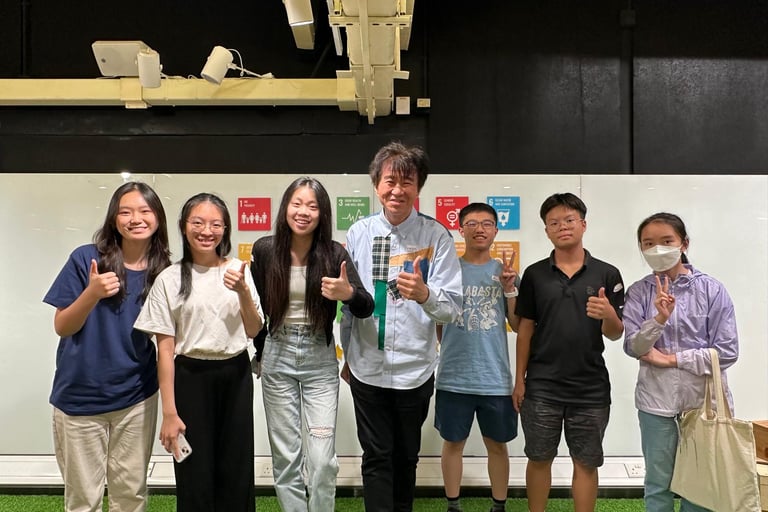
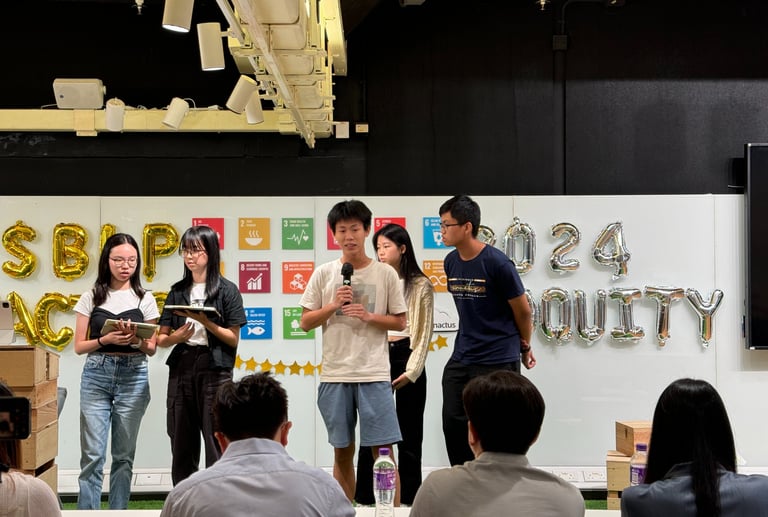
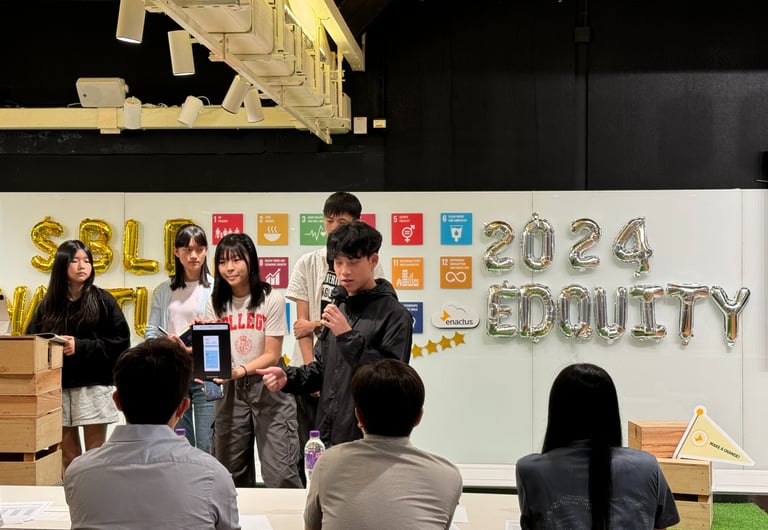
Final Presentations & Closing Ceremony
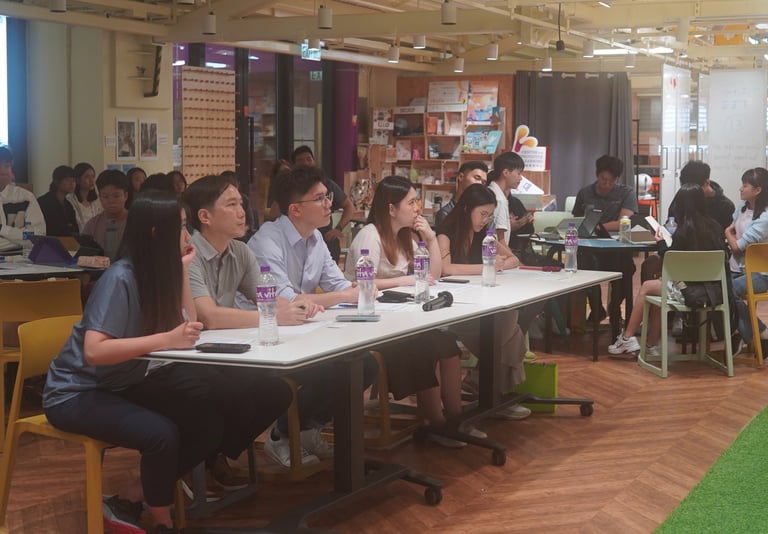
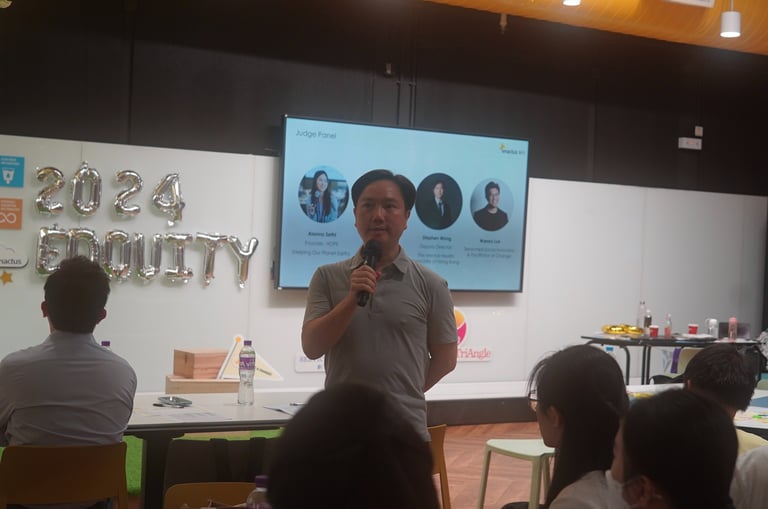
Each team presented its proposal before a judging panel of professionals, who assessed projects based on innovation, empathy, and feasibility. The panel included:
Alanna Sethi – Founder, Helping Our Planet Earth (HOPE)
Rachel Mui – Project Manager, Hong Kong Council of Social Service (HKCSS)
Stephen Wong – Deputy Director, Mental Health Association of Hong Kong
Warren Luk – Seasoned Social Innovator and Facilitator of Change
Vivian Looi – Co-founder and CEO, EdQuity Hong Kong Foundation
The top three teams received special recognition for outstanding creativity, user insight, and implementation potential.
You may find an Instagram Recap post of Day 3 here.
Discussion FrameWork: From Awareness To Action
At the heart of the ThinkTank Program is discussion-based learning, inspired by the Harkness method and intentionally embedded within the Empathy stage of the Design Thinking process. These discussions were not separate from the design journey, but rather the foundation of it, helping participants deeply understand users’ experiences, emotions, and perspectives before defining problems and generating solutions. Through open dialogue, critical reflection, and collaborative reasoning, participants developed empathy and contextual awareness that informed every subsequent phase of design.
Discussion Session 1: Understanding Mental Health (Day 1)
The first discussion introduced participants to the evolution of mental health across history and cultures. Through guided questions, they examined how past beliefs and treatment approaches shaped today’s systems of care and stigma.
Explored how ancient civilizations, religious views, and modern psychiatry influenced perceptions of mental illness.
Reflected on key figures such as Philippe Pinel and Sigmund Freud and the development of the DSM.
Investigated how changes in understanding and classification shaped social attitudes toward mental health.
Discussion Session 2: Factors Affecting Mental Health (Day 2)
The second discussion shifted focus from “what mental health is” to “what shapes it.” Participants examined how stress, inequality, and access to care affect mental well-being at both personal and systemic levels.
Discussed social determinants such as education, housing, and economic stability.
Considered barriers to accessing mental health services including stigma, cost, and cultural factors.
Evaluated the role of policy and public systems in ensuring equitable mental health care.
Discussion Session 3: Improving Mental Health in Society (Day 2)
The final discussion encouraged participants to transition from understanding problems to envisioning change. Teams proposed ways to enhance mental health through innovation and policy reform.
Explored the role of support systems, education, and self-care in promoting mental well-being.
Debated how workplaces, schools, and government programs can build sustainable support networks.
Connected ideas of empathy and equity with practical levers for systemic change.
Project Ideas
Each team presented their design challenge, proposed solution, and key learnings from the process. Guided by the Design Thinking framework, participants explored different mental health issues, ranging from anxiety and eating disorders to PTSD and ADHD, and designed innovative solutions that combined empathy, creativity, and real-world relevance.
Group 1 – Incremental: PTSD and AI Art Exposure Therapy
Group 1 focused on Post-Traumatic Stress Disorder (PTSD) and sought to empower individuals in their healing journey through creativity and self-expression. Their project proposed an AI-powered art exposure therapy platform that allows users to create and engage with personalized artwork and stories. By integrating technology with emotional healing, the team aimed to make art therapy more accessible, engaging, and supportive for those coping with trauma.
Group 2 – Libi: Bipolar Disorder and Smart Emotion Tracking
Group 2 tackled the daily challenges faced by individuals with Bipolar Disorder. They designed a smart bracelet capable of detecting changes in heart rate and physiological patterns associated with mood shifts. The device provides users with gentle alerts and data insights to help them recognize early signs of manic or depressive episodes. Through technology and self-awareness, the team envisioned a practical tool that supports emotional regulation and promotes stability in everyday life.
Group 3 – Hosik: Eating Disorders and Digital Wellbeing
Group 3 addressed the issue of Eating Disorders, developing an app called Hosik to promote healthy relationships with food and body image. The app encourages mindful eating, provides nutrition education, and incorporates community support features for peer encouragement. By combining digital tools with behavioral reinforcement, the team aimed to help users build sustainable, positive eating habits and reduce the stigma surrounding recovery.
Group 4 – Café Plus: Anxiety and Community Support
Group 4 focused on Anxiety Disorders, envisioning Café Plus—a café concept designed as a safe, inclusive space for individuals to unwind, share experiences, and connect with others facing similar struggles. The café would host therapeutic group activities and mindfulness sessions, blending social connection with emotional wellness. The team hoped to normalize mental health conversations in everyday settings and provide an accessible entry point for support and understanding.
Group 5 – Mine U Mental: ADHD and Inclusive Learning Environments
Group 5 centered their project on Attention Deficit Hyperactivity Disorder (ADHD) and the social misunderstandings that often surround it. Their idea, Mine U Mental, was a workshop-based program designed to enhance mutual understanding between ADHD students and their peers. By using interactive activities, storytelling, and guided discussions, the initiative fosters empathy, inclusion, and improved communication within school communities.
Group 6 – Sleep Deprived: PTSD and Immersive Awareness Campaign
Group 6 explored innovative ways to raise awareness about PTSD through interactive media. Their project, Sleep Deprived, proposed a public campaign featuring panoramic interactive screens that combine immersive gaming, storytelling, and therapeutic design. By blending entertainment and empathy, the team sought to destigmatize PTSD, spark conversation, and make mental health education engaging for broader audiences.
Conclusion
The ThinkTank Program offered participants a transformative experience to engage with mental health, an issue often overlooked or stigmatized, in a deeply active and human way. Through discussion-based learning, they stepped beyond the boundaries of traditional classroom education, voicing their perspectives, challenging assumptions, and learning from one another’s lived experiences. Guided by the Design Thinking framework, participants transformed understanding into action, applying empathy, creativity, and critical thinking to develop real solutions for social change. More than a workshop, the program empowered students to see themselves as capable changemakers, individuals whose ideas, compassion, and initiative can meaningfully shape a more inclusive and empathetic society.

info@hkedquity.org
+852 9829 7377
EdQuity Hong Kong Foundation Limited © 2026
Registered Charity IR File No. 91/19551
www.hkedquity.org is owned by